

Claude: The AI Model Built for Accuracy, Not Just Speed
Most AI models are optimised to produce responses that feel confident and comprehensive. Claude, developed by Anthropic, is optimised to produce responses that are accurate, honest, and appropriately calibrated to uncertainty. The difference may sound subtle, but in business contexts — where decisions carry financial, legal, or reputational consequences — it is profoundly important.
Anthropic built Claude on what they call Constitutional AI— a training methodology specifically designed to make the model honest about what it knows and what it doesn't, to avoid harmful outputs, and to reason through complex, multi-step problems with genuine intellectual rigour. For business users, this means fewer hallucinations, more nuanced analysis, and a model that will flag when a question exceeds its reliable knowledge rather than fabricating a plausible-sounding answer.
At LORD Studio, we deploy Claude across client engagements that involve dense analytical tasks, complex business solution architecture, and sensitive document processing — precisely the scenarios where Claude's reliability advantage over less rigorously designed models is most apparent.
Claude is also notable for the quality of its written output. Its responses are structured, clearly reasoned, and tonally appropriate across a wide range of business communication contexts — from executive briefings and board-level reports to detailed policy analysis and stakeholder communications. Businesses consistently report that Claude's drafts require significantly less editing than those produced by other models, reducing friction in content-heavy workflows.
Where Claude Delivers the Most Business Value
Claude's particular strengths align closely with the needs of analytical, document-heavy, and judgment-intensive business functions:
Long-Document Analysis: Contracts, Reports, and Regulatory Filings
Claude offers one of the largest context windows of any commercially available AI model — capable of ingesting and reasoning across entire contract sets, multi-year financial filings, or comprehensive regulatory documentation in a single session. Where other models lose coherence or miss critical nuances partway through a long document, Claude maintains consistent analytical quality from the first page to the last. Legal teams use it to identify non-standard clauses across supplier agreements. Finance teams use it to cross-reference disclosures across quarterly reports. Compliance officers use it to map internal policies against evolving regulatory requirements. In each case, the combination of long-context capability and high factual reliability makes Claude significantly more productive than manual review.
Complex Business Problem-Solving and Strategic Analysis
Claude excels at the kind of multi-step, structured reasoning that strategic business problems demand. It can evaluate a proposed market entry from multiple angles simultaneously — regulatory landscape, competitive dynamics, operational requirements, financial modelling assumptions — and present a structured analysis that highlights the strongest concerns and most promising pathways. For leadership teams, this means having a capable analytical partner available on demand for strategy sessions, scenario planning, and investment evaluation, without the overhead of commissioning a full consulting engagement for every significant decision.
High-Quality Written Communications for Professional Environments
Claude produces exceptionally well-structured professional writing. Executive summaries, board presentations, investor communications, RFP responses, and policy documents all benefit from Claude's ability to synthesise complex information into clear, logically organised prose with appropriate tone calibration. The model understands register — it will write differently for an internal operations memo versus a client-facing proposal versus a public-facing press release — and it does so reliably without extensive prompt engineering. For organisations that produce high volumes of professional content, the time savings are substantial.
Sensitive Data Handling and Enterprise Privacy Standards
Anthropic's data protection policies for Claude for Enterprise are designed to meet demanding corporate governance requirements. Customer data submitted through the Claude API or enterprise deployment is not used to train Anthropic's models. Organisations can deploy Claude within private infrastructure configurations with SCIM-based user management, SSO integration, and full audit logging. For industries handling particularly sensitive data — financial services, healthcare, legal, and government — these controls provide a compliance-ready deployment path that less rigorously governed AI models cannot match.
Research Synthesis and Knowledge Management at Scale
For businesses with large internal knowledge bases — product documentation, technical manuals, client histories, research archives — Claude can serve as an intelligent retrieval and synthesis layer. Ask Claude to summarise everything known about a particular client's preferences and history, or to identify patterns across a year of customer support transcripts, or to extract the key engineering decisions from a product development archive, and it will produce coherent, useful answers grounded in the actual source material. This transforms static knowledge repositories into dynamic organisational intelligence assets.
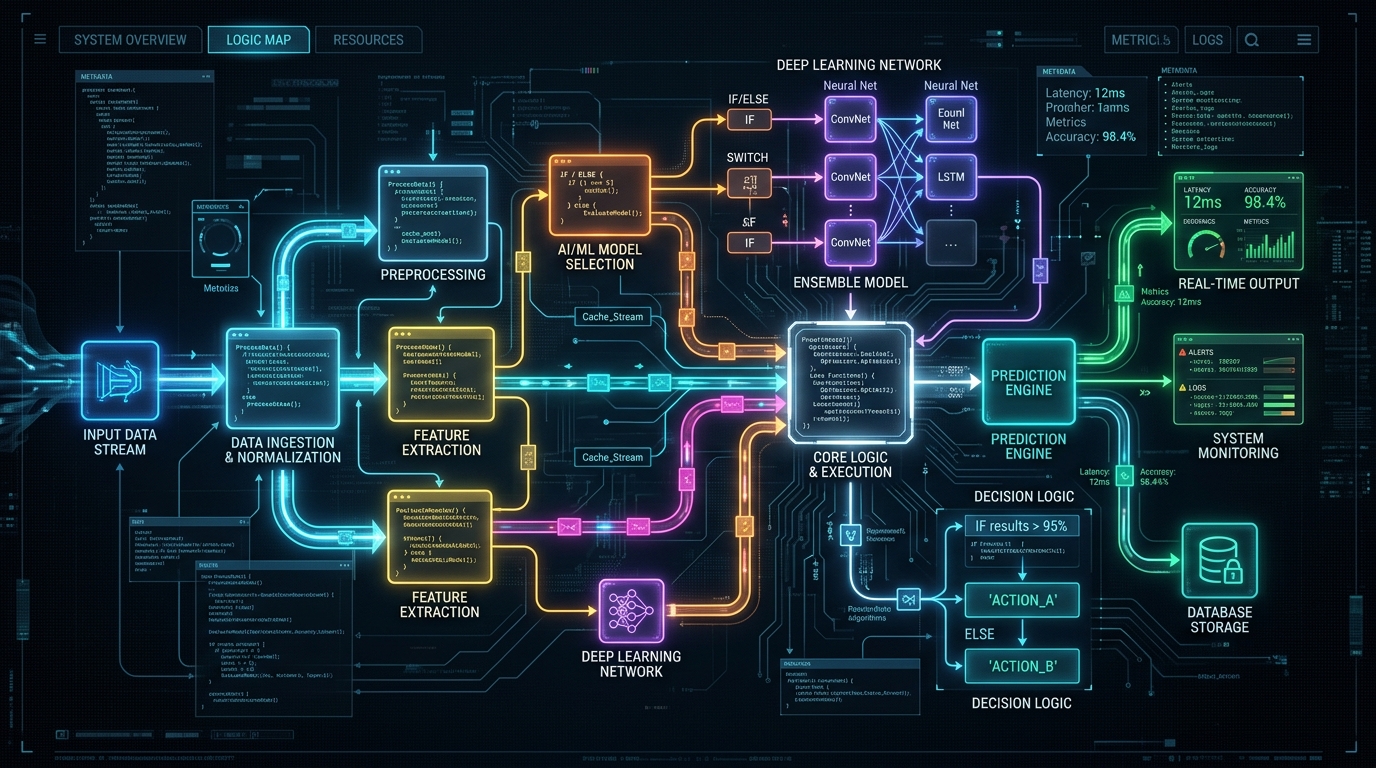
 This photo was generated by AI.
Why Claude Is Particularly Well-Suited for Professional Services and Regulated Industries
In high-stakes professional environments — law, finance, healthcare, management consulting — the cost of AI hallucinations is not a minor inconvenience. A fabricated legal precedent, an incorrect financial figure, or a mischaracterised regulatory requirement can have serious consequences. Claude's Constitutional AI foundation significantly reduces this risk by making the model more likely to express appropriate uncertainty rather than generating confident-sounding but incorrect information.
This makes Claude a particularly natural fit for workflows where human experts need AI assistance but cannot afford to spend significant time fact-checking every AI output. The model's tendency toward epistemic honesty — acknowledging when something is uncertain or beyond its reliable knowledge — means professionals can calibrate their trust in its outputs more reliably than with models that always present maximal confidence regardless of actual certainty.
At LORD Studio, we incorporate Claude into client workflows where this reliability advantage is most commercially meaningful — and we design integrations that connect its analytical capabilities directly to the data and systems where those capabilities create the most value.
Claude Capabilities Across LORD Studio Services
Discover how we apply Claude's analytical reasoning across our primary digital solution areas:
 This photo was generated by AI.
Claude for Business: Frequently Asked Questions
What is Constitutional AI and why does it matter for business?
Constitutional AI is Anthropic's training methodology for Claude, designed to make the model reliably honest, appropriately uncertain, and resistant to producing harmful or misleading outputs. For businesses, the practical implication is that Claude is more likely to acknowledge when it doesn't know something rather than fabricating a plausible answer — a critical property for any professional environment where incorrect AI output carries real consequences.
How large is Claude's context window and why does it matter?
Claude's context window is among the largest available in commercial AI — allowing it to process entire legal contracts, annual reports, or extensive research archives in a single session without losing coherence or missing critical details. For business users dealing with dense, voluminous documentation, this means dramatically faster analysis and synthesis compared to models that require documents to be split into fragments.
Is Claude better than ChatGPT for business use?
Claude and ChatGPT serve different strengths, and the best choice depends on your specific use case. Claude tends to outperform in tasks requiring nuanced analytical reasoning, long-document processing, and high-quality structured writing where factual reliability is paramount. ChatGPT tends to offer stronger versatility for general-purpose business automation, customer-facing interactions, and workflow integrations at scale. Many organisations use both for different functions.
Can Claude handle sensitive and confidential business information securely?
Yes. Claude for Enterprise is governed by Anthropic's enterprise data protection policies, under which customer data is not used to train Anthropic's models. Enterprise deployments support SSO, SCIM provisioning, and full audit logging. For particularly sensitive workloads, Claude can be deployed through configurations that provide additional data isolation appropriate for regulated industry requirements.
The Right AI Model for When Accuracy Is Non-Negotiable
In professional environments where the cost of error is high and the volume of complex analysis is large, Claude represents one of the most compelling AI tools available. Its combination of long-context capability, Constitutional AI reliability, and high-quality professional writing output makes it a genuinely transformative resource for the business functions that need AI assistance most but can least afford AI mistakes.